Driving the Future of Powertrain Design for Advanced Vehicle Performance
Smart Engines, Sustainable Futures.
Powertrain Design and Development for Next-Gen Vehicle Performance
Modern automotive engineering demands end-to-end optimization across the entire vehicle—from body structures and chassis to the powertrain and its associated systems. Powertrain development, in particular, poses unique challenges due to the intricate interplay of nonlinear, vibratory, and thermomechanical behaviors. At DEP, our seasoned automotive experts leverage MeshWorks to model, design, and scale the electromagnetic, mechanical, and thermal properties of powertrain components with precision. Our comprehensive optimization strategy integrates key factors such as cost-efficiency, manufacturability, and production scale. By frontloading trade-offs at the component and subsystem level, we deliver a balanced, high-performing powertrain that enhances overall vehicle attributes.
Focus Area

Durability
Block head durability
Engine mount durability
Gasket sealing analysis
Engine components structural analysis
Rotating/Reciprocating components structural analysis
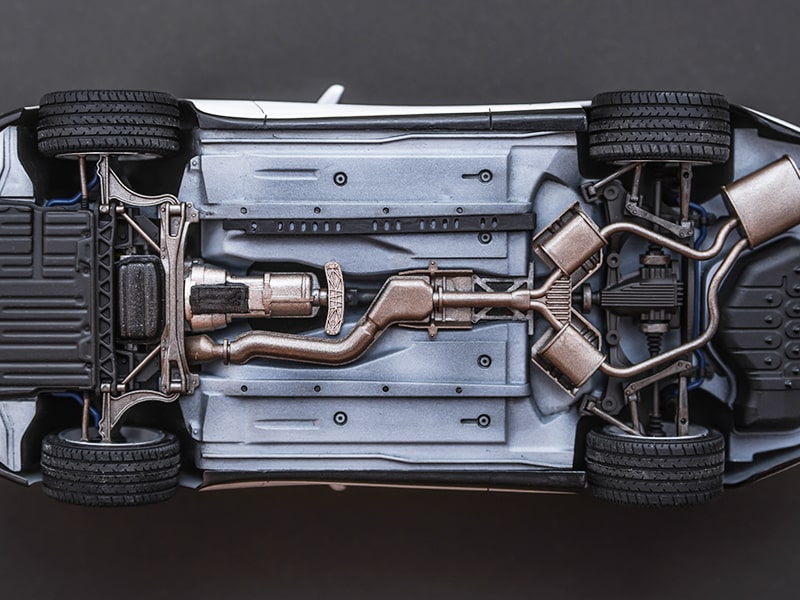
NVH
PT Bending analysis
Engine Assembly NVH
Engine mount dynamic stiffness
Accessory NVH
Radiated Noise
Rear axle stress & NVH analysis
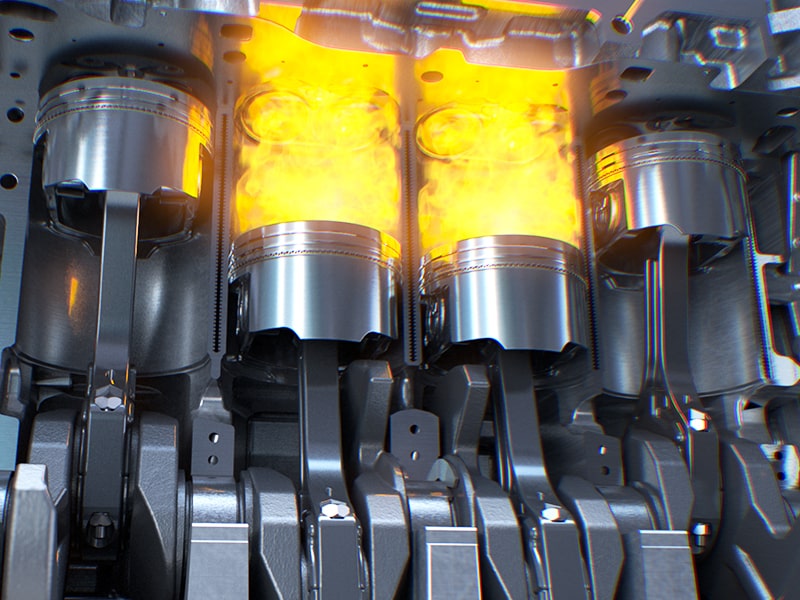
Thermal Management
Full engine performance, prediction & validation
1D simulation
Oil lubrication system
Piston lube oil consumption
Full Fuel injection system
Piston cooling via oil jet analysis
Engine coolant side CFD simulation
Torque Converter CFD analysis
Engine oil circuit analysis
Dynamics
Engine sealability
Mount and accessory bracket tuning
Crank train Multi-body Dynamics
Clutch assembly modeling and analysis
Park pawl system MBD & Stress analysis
Gearshift mechanism MBD & Stress analysis
Powertrain bending dynamics
Powertrain torsional dynamics
Value Engineering
Topology optimization
Shape optimization
Lightweighting
MBD optimization
Services
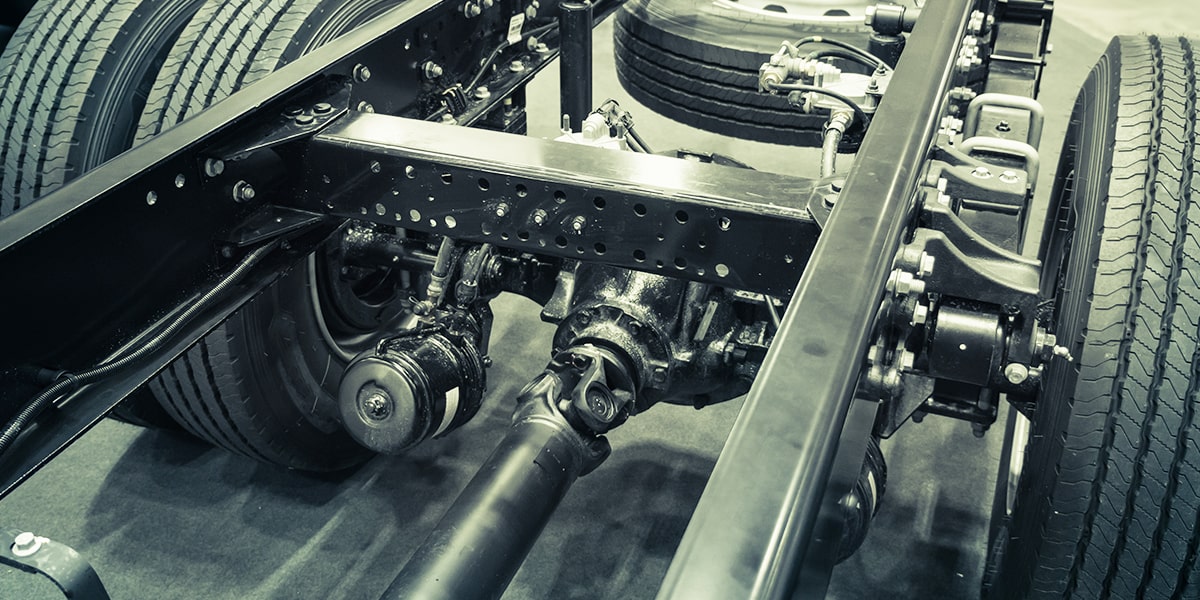
Axle differential and braking system optimization enhances vehicle handling, stability, and safety across various driving conditions, improving torque distribution and reducing braking distances.

DEP Differentiators

MeshWorks-Powered Design Optimization
DEP leverages its proprietary MeshWorks platform to accelerate and optimize engine design through advanced morphing, parameterization, and simulation. This unique integration allows rapid iterations and performance-driven design modifications at both component and system levels.

25+ Years of Legacy and support
With over 25 years of experience, DEP’s legacy of innovation and expertise ensures that clients receive continuous support, cutting-edge solutions, and reliability, driving long-term value in every project.

Multi-Fuel and Emission-Compliant Engine Solutions
With a deep understanding of global regulatory requirements, DEP specializes in designing fuel-flexible, low-emission engines, including Gasoline, Diesel, CNG, and GCI engines, that comply with current and emerging emission norms worldwide.

Cross-Domain Expertise with System-Level Integration
DEP’s multidisciplinary teams integrate mechanical, thermal, fluid, and control systems for holistic engine performance optimization, ensuring reliability, durability, and manufacturability in real-world applications — especially critical in automotive, off-highway, and marine sectors.

Innovation at the Core
DEP stands out by embedding innovation at every stage of development, from conceptualization to execution. By constantly evolving and staying ahead of industry trends, DEP ensures that each solution is not only effective but also future-proof, maintaining a competitive edge in an ever-changing market.
Resources
Webinar
Learn how DEP can help solve your hardest engineering challenges in Powertrain
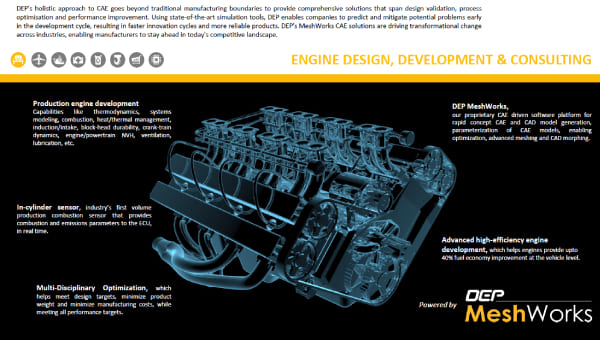
Brochure
Engine Design, Development & Consulting
Blogs