Pioneering Excellence in Marine Engineering: Delivering Superior Performance and Safety
Innovative Design, Enhanced Performance
Recent advances in the maritime industry have led to the emergence of new designs with improved seakeeping qualities and significantly increased velocity. Existing ship types, such as bulk carriers, general cargo carriers, tankers, gas carriers, and container ships, have also been modified. While frigate designs have significantly changed, the propulsion systems that are now in use have also changed dramatically. The design and development process must be cost-effective, require minimal manpower, be available when needed, and be overly vulnerable. The safety of the ship, its crew, and the environment in which it sails are all critical. With more than 2 decades of experience from completing many projects and programs, the DEP team can assist in marine product development from concept to production at a faster pace. Ourexpert's team can help from design phase of development to engineering support and plan review, as well as technical services, and deliver quality results for manufacturers in newbuild projects.
Our Services
Hull Optimization and Hydrodynamic Analysis
Hull optimization ensures the vessel operates with maximum efficiency, minimizing resistance and improving fuel consumption through advanced hydrodynamic simulations.
DEP Key Capabilities
CFD simulations
Drag reduction
Structural Integrity and Fatigue Analysis
Evaluating the structural integrity of marine vessels is essential to ensure long-term durability under harsh environmental conditions, including wave loads and operational stress.
DEP Key Capabilities
FEA simulations
Fatigue prediction
Marine Propulsion System Design and Simulation
Efficient propulsion system design is critical for reducing fuel consumption and emissions while maximizing vessel speed and manoeuvrability.
DEP Key Capabilities
Propulsion optimization
Multi-physics simulation
Vibration and Noise Control
Reducing vibration and noise is important for enhancing onboard comfort and ensuring compliance with environmental regulations, particularly in passenger vessels.
DEP Key Capabilities
Acoustic analysis
Vibration mitigation
Capabilities
Parameterization
DEP’s parameterization process covers a wide range of areas to optimize designs and improve product performance. This includes shape, structural, and topology optimization, alongside detailed work on welds, adhesives, and composites. Key elements like bulkheads and doublers are also evaluated to enhance the strength and durability of structures. DEP's expertise ensures that every aspect of the design is tailored for optimal efficiency and robustness.
Engineering
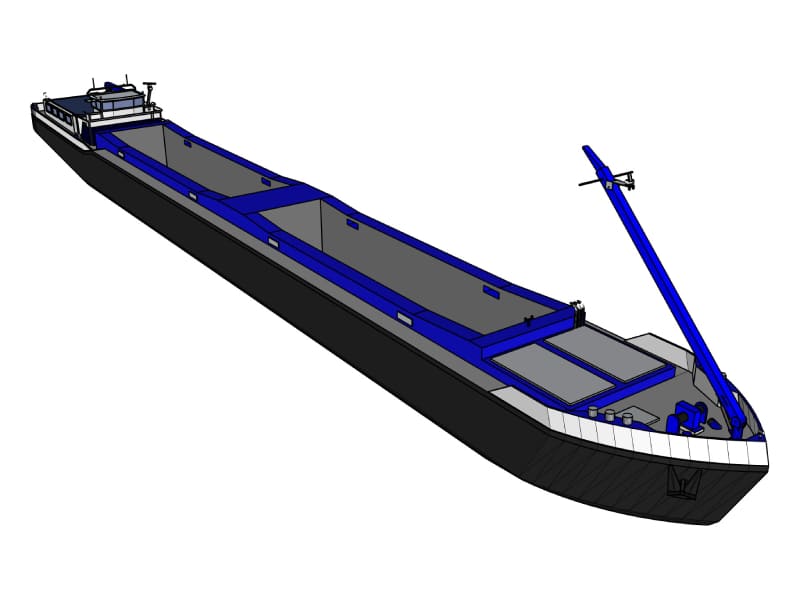
DEP offers specialized engineering services for offshore marine engineering, ship structural design, and vibroacoustic analysis. These services are complemented by expertise in transitioning from metal to composite materials and conducting advanced computational fluid dynamics. DEP’s engineering capabilities ensure that marine structures meet high standards of safety, durability, and performance in challenging environments.
Ship configurations
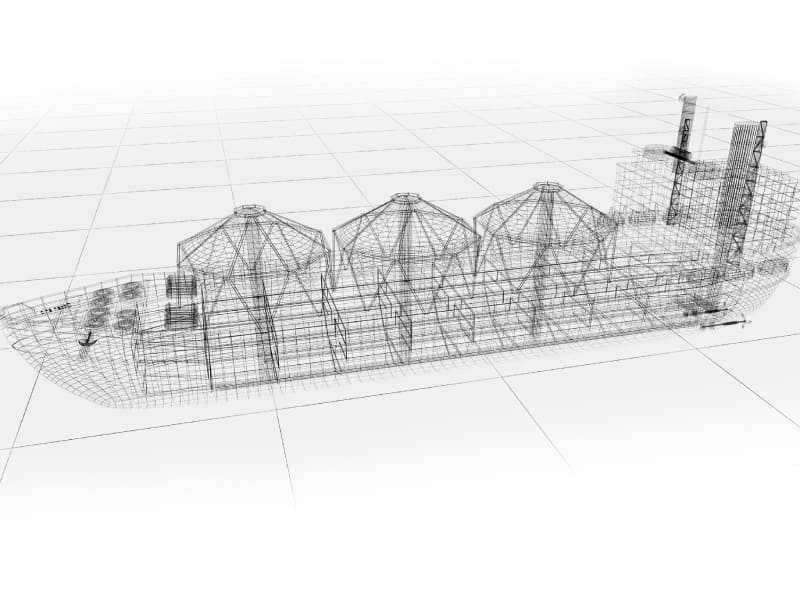
DEP is well-versed in designing and analyzing various ship configurations, including tankers, bulk carriers, container ships, and ocean liners. Each ship type requires a tailored approach to ensure optimal structural integrity, load management, and fuel efficiency. DEP’s thorough understanding of these vessels enables the development of reliable, high-performance designs.
Modelling of Critical Areas
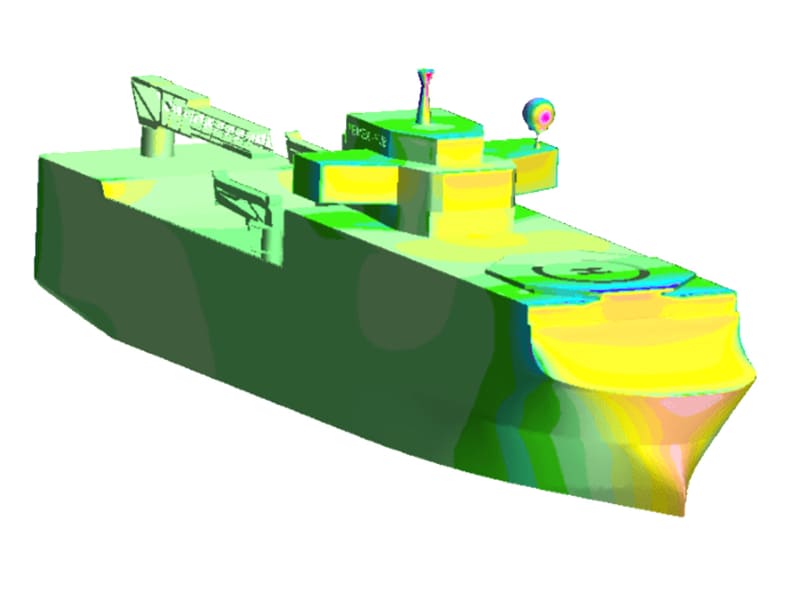
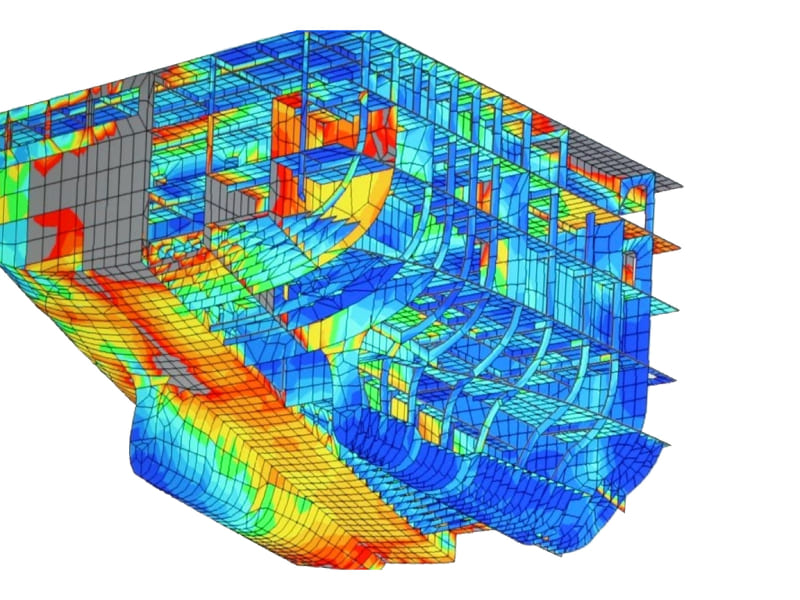
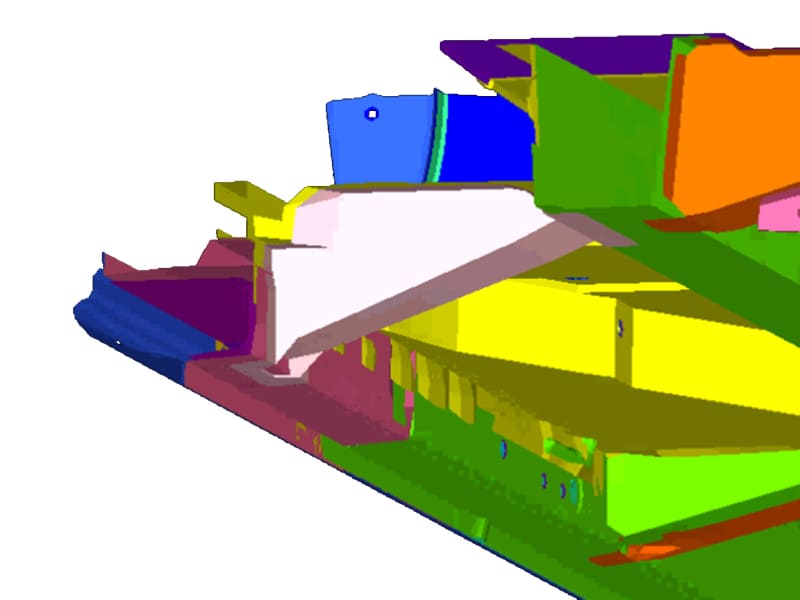
DEP focuses on accurately modelling critical areas such as connections, openings, and bracket toes, along with structural knuckle points. This includes analyzing primary, secondary, and tertiary bending on global finite element (FE) models and assessing stress and deformation for yielding and buckling. Vibroacoustic analysis is also integrated to account for global bending and torsional modes, ensuring a comprehensive understanding of a structure’s behaviour under various conditions.
Vibroacoustic Analysis
DEP's vibroacoustic analysis involves detailed evaluation of global bending and torsional modes, bulkhead stress, and deformation for buckling prevention. The analysis extends to composite ply optimization, acoustic cavity model building, and structure-acoustic coupling. Forced frequency and acoustic response assessments are crucial for minimizing noise and vibration, ensuring quieter, more comfortable operations.
Weight Optimization
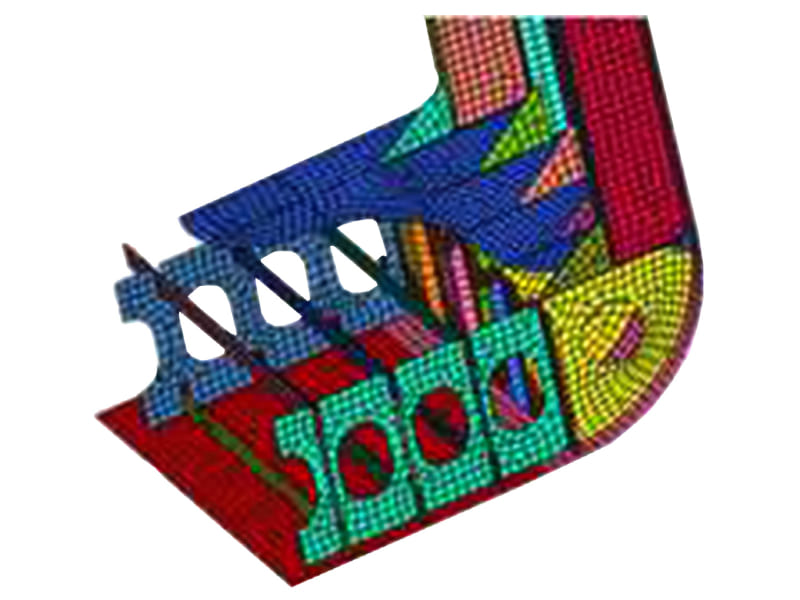
DEP’s weight optimization strategies explore alternate configurations and materials, with a focus on lightweight composites. By reducing weight without sacrificing strength or performance, DEP helps improve fuel efficiency and operational costs. The use of advanced materials and design adjustments allows for better structural integrity and reduced environmental impact.
Benefits Of Scalable Marine Solutions


What makes us stand out?

Successful Projects
Our portfolio showcases a series of successful collaborations across various industries, demonstrating our ability to deliver innovative solutions that meet client needs and exceed expectations.

Ongoing Projects
We are engaged in cutting-edge projects that push the boundaries of technology and engineering, allowing us to continuously refine our expertise and stay ahead in the market.

Expert Team
Our team of highly skilled engineers and industry experts brings a wealth of experience and specialized knowledge, ensuring that every project benefits from best-in-class practices and insights.

Client-Centric Approach
We prioritize our clients' unique challenges and objectives, fostering strong partnerships and providing tailored solutions that drive tangible results and long-term success.
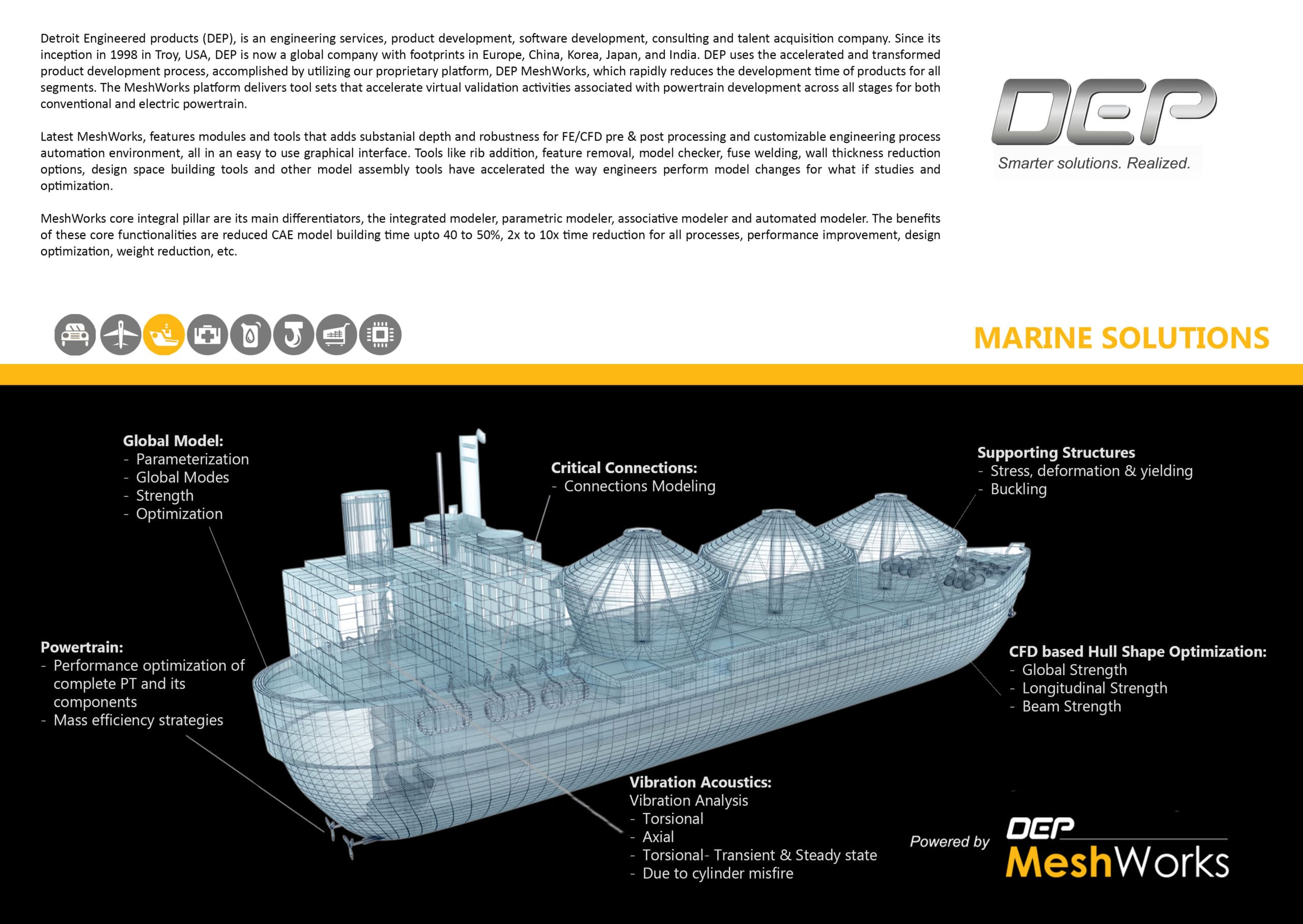
Marine Solutions
End to End Engineering Solutions
Global Model
Powertrain
Critical Connections
Vibration Acoustics
CFD Based Hull Shape Optimization